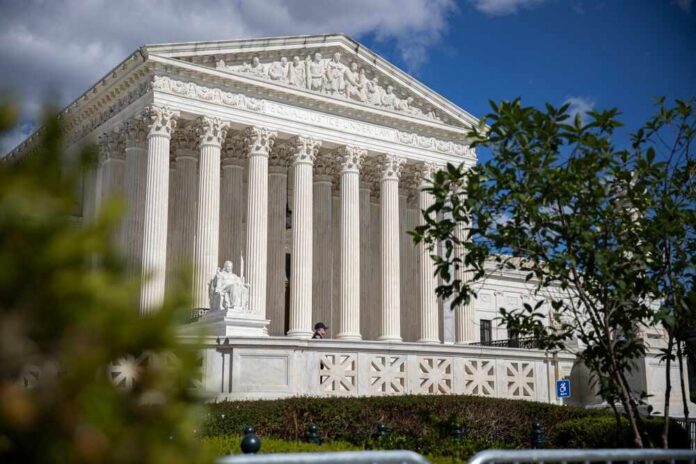
Supreme Court Justice Neil Gorsuch publicly rebuked President Trump’s expectation of judicial loyalty, declaring his oath binds him only to the Constitution—a rare defense of judicial independence that exposes deep tensions between the executive branch and the nation’s highest court.
Story Snapshot
- Justice Gorsuch directly responded to Trump’s public attacks, stating “my loyalty is to the Constitution” in a CBS News interview
- Trump appointed Gorsuch in 2017 but has since criticized his Supreme Court picks when they rule against executive preferences
- The clash highlights fundamental questions about separation of powers and whether justices owe allegiance to appointing presidents
- Gorsuch’s public statement represents a rare judicial pushback against presidential pressure on the Court
Gorsuch Draws Constitutional Line Against Presidential Pressure
Justice Neil Gorsuch confronted President Trump’s loyalty demands in a CBS News interview with chief legal correspondent Jan Crawford. Gorsuch stated unequivocally: “A justice does not owe a president loyalty. My loyalty is to the Constitution, the laws of the United States. That’s the oath I took. It’s really just that simple.” The statement came amid Trump’s public attacks on Supreme Court justices he appointed, including Gorsuch, following rulings that contradicted the administration’s positions. Gorsuch’s willingness to address the matter publicly breaks from typical judicial reticence on political controversies.
Trump nominated Gorsuch in January 2017 to fill the vacancy created by Justice Antonin Scalia’s death, and the Senate confirmed him that April. The president’s frustration with his appointees has grown as the Court delivers rulings he opposes, reflecting his view that justices should demonstrate loyalty to the president who elevated them. This expectation clashes with foundational principles of American governance that require judges to remain independent arbiters of law, not political allies. Gorsuch’s response underscores that judicial oaths bind justices to constitutional fidelity, not personal allegiance to any executive.
Pattern of Presidential Attacks on Judicial Independence
Trump’s criticism of Gorsuch follows a pattern of attacking other justices he appointed, including Brett Kavanaugh, when their decisions displease him. Historical precedents exist for presidential pressure on courts—Franklin D. Roosevelt’s court-packing plan stands as perhaps the most aggressive example—but justices rarely respond publicly to affirm their constitutional loyalty. The current tension emerged during high-profile cases involving executive actions, where Trump expected favorable outcomes based on his appointment power. For Americans watching this unfold, the exchange raises troubling questions about whether our institutions can withstand political interference from powerful executives.
The power dynamics reveal a president who views judicial appointments as transactional, expecting returns on his nominations in the form of supportive rulings. Gorsuch’s rejection of this framework reinforces separation of powers, a cornerstone principle designed to prevent any single branch from dominating government. Trump supporters may interpret Gorsuch’s stance as ingratitude or disloyalty, while constitutional traditionalists view it as essential maintenance of judicial integrity. This divide reflects broader frustrations among citizens who increasingly question whether government institutions serve the people or the political ambitions of those in power.
Implications for Judicial Norms and Public Trust
Gorsuch’s public affirmation of constitutional loyalty carries immediate and long-term implications for judicial independence. In the short term, his statement potentially deters future presidential attempts to pressure justices through public criticism or loyalty demands. Long-term effects may include establishing a precedent for justices to speak out when executive overreach threatens judicial autonomy, strengthening institutional norms against political interference. The legal community has emphasized separation of powers as essential to preventing governmental tyranny, a concern shared across the political spectrum by citizens frustrated with elite manipulation of institutions.
The clash bolsters public trust in the Supreme Court among those who value institutional integrity, even as it may erode confidence among Trump’s base who expect appointed justices to advance conservative priorities. For everyday Americans struggling to achieve prosperity while watching wealthy elites game the system, this controversy highlights how even the highest court faces pressure from powerful political figures. Gorsuch’s stand demonstrates that some institutional guardrails remain functional, though the very fact that such a public declaration became necessary reveals how fragile those protections have become in an era of escalating political warfare.
Sources:
Lawyers’ Committee Analysis of Gorsuch Nomination Record