
A “ceasefire” that still features drones, warning shots, and U.S. warships destroying Iranian attack boats is the kind of peace that can collapse in a single bad night.
Story Snapshot
- U.S. forces are escorting ships through the Strait of Hormuz under “Project Freedom” as Iran threatens to attack vessels transiting without Iranian permission.
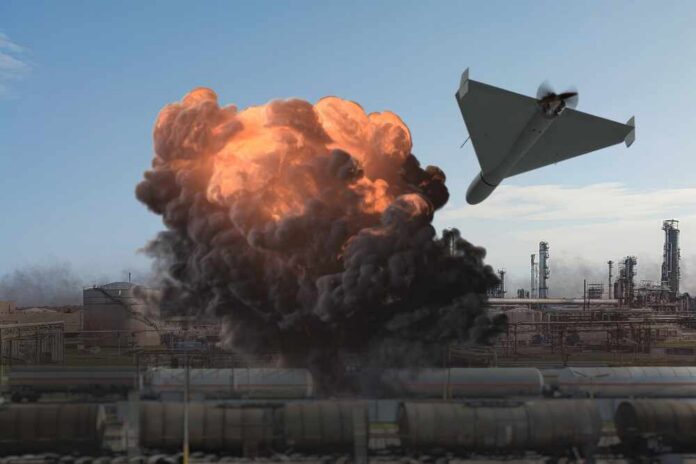
- Iran struck an Emirati-affiliated tanker with drones on May 3, followed by U.S. escorts and reported destruction of multiple Iranian swift boats on May 4.
- Roughly a quarter of global seaborne oil and a fifth of LNG normally pass through Hormuz, making prolonged disruption a direct inflation and supply-chain risk.
- Diplomacy appears largely frozen after failed talks and competing claims over who controls the waterway, raising the odds of a wider regional spillover.
Project Freedom puts U.S. sailors between commerce and chaos
U.S. naval forces are now conducting “Project Freedom,” a temporary escort mission intended to move commercial traffic through the Strait of Hormuz despite Iran’s attempt to enforce a blockade. Pentagon leaders say the ceasefire is still holding, but they’re also signaling readiness to escalate if Iranian attacks continue. The basic reality is unavoidable: escort operations place American sailors directly in the line of fire in a narrow chokepoint where split-second decisions can trigger a broader fight.
May’s early incidents show how quickly the situation can swing. After Iran used drones to strike an Emirati-affiliated tanker attempting transit on May 3, U.S. forces escorted two U.S.-flagged cargo ships through the strait on May 4 without damage. In the same period, Iranian forces reportedly fired a “warning shot” at a U.S. warship, and U.S. forces reported destroying more than six Iranian swift boats. No commercial tankers reportedly transited that Monday, underscoring how fear and insurance costs can shut lanes even when escorts exist.
Iran is trying to turn geography into a toll booth
Iran’s strategy appears built around the simple advantage of geography: the regime sits astride a narrow maritime corridor that the world uses to move energy. Iranian officials have signaled they may strike warships and commercial vessels that pass “without permission,” while Iran also publicized claims of control across the strait. Those moves point to an effort to normalize coercion—turning an international shipping lane into something like a permission-based system where intimidation, fees, or selective passage become bargaining tools rather than temporary wartime tactics.
Washington’s response mixes restraint with explicit warnings. U.S. commanders have emphasized that current restraint should not be mistaken for lack of resolve, while continuing to deploy overwhelming air and naval assets in the region. Even with that advantage, the tactical problem remains: drones, missiles, and small-boat swarms can create disproportionate risk for civilian shipping, especially if Iran decides that hitting commercial targets is the most politically useful way to raise costs without inviting immediate regime-threatening retaliation.
Why Hormuz matters to your wallet, not just the map
The economic stakes are large because the Strait of Hormuz is not just another shipping lane. Before the war, about 25% of the world’s seaborne oil trade and about 20% of liquefied natural gas moved through this corridor. If tankers avoid the route—or transit slows under threat—energy markets can lurch on fear alone. For U.S. households already exhausted by years of inflation, higher fuel and shipping costs can quickly bleed into groceries, travel, and any product moved by truck.
A fragile “ceasefire” exposes a deeper government credibility problem
Politically, the episode lands on sore ground for voters across the spectrum: confidence that federal leaders can prevent crises from spiraling, tell the truth about what’s happening, and protect American interests without drifting into open-ended conflict. The public record already includes conflicting claims and moving goalposts—for example, earlier assertions that the strait had reopened were later contradicted by continued disruption. When war planning, diplomacy, and messaging diverge, Americans tend to assume the system serves insiders first and ordinary families last.
The Strait of Hormuz War of 2026 Might Have Just Startedhttps://t.co/ROQIWWu0x9
— 19FortyFive (@19_forty_five) May 5, 2026
What comes next depends less on speeches and more on the next encounter at sea. Each drone strike, warning shot, or attempted boarding creates a new chance for miscalculation, casualties, and a rapid shift from “escort mission” to sustained shooting war. Limited public details remain on rules of engagement and on what enforcement Iran can sustain under pressure, but the pattern is clear: as long as the strait is contested, the world economy—and American consumers—remain hostage to a narrow strip of water.
Sources:
The Strait of Hormuz War of 2026 Might Have Just Started
Iran Update, Special Report, May 4, 2026
Iran war live updates: Trump, Strait of Hormuz ship attack threat, peace proposal
2026 United States naval blockade of Iran