California’s political class just used a taxpayer-funded Planned Parenthood bailout as the backdrop for scolding reporters who asked the “wrong” questions.
Quick Take
- California Gov. Gavin Newsom signed SB 106 on Feb. 11, 2026, sending $90 million in emergency funding to Planned Parenthood.
- First Partner Jennifer Siebel Newsom publicly rebuked reporters during the Sacramento bill-signing event, accusing them of ignoring women’s health.
- The new appropriation follows roughly $145 million California provided in fall 2025 after federal Medicaid funding to Planned Parenthood was blocked under a 2025 Trump law.
- State officials say the funding protects access to services like cancer screenings, contraception, and STI testing; Republicans argued rural hospitals and broader access issues should come first.
A $90 Million “Emergency” Bill Signing Turns Into a Media Showdown
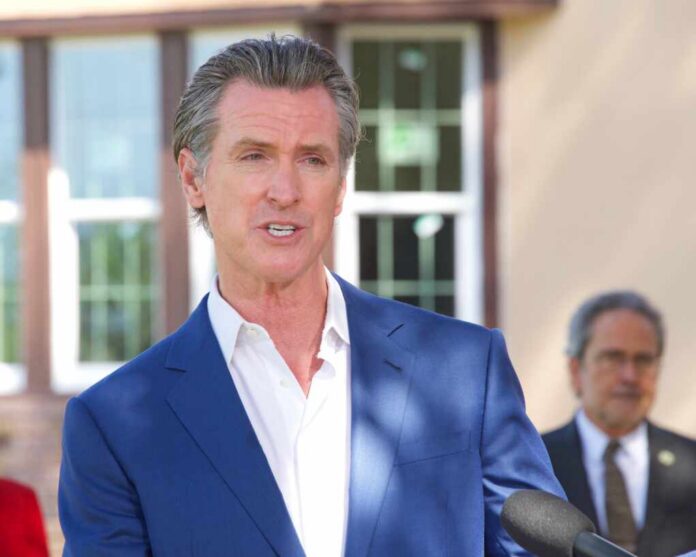
Gov. Gavin Newsom signed Senate Bill 106 at a Feb. 11, 2026, news conference near the California Capitol, approving $90 million in emergency funding for Planned Parenthood. During the event, California First Partner Jennifer Siebel Newsom stepped to the podium and sharply criticized members of the press for asking questions she said were “about other issues,” framing it as part of a wider “war on women.” Video of the exchange quickly became a story of its own.
The confrontation mattered because it happened at an official state ceremony, not a campaign rally. The policy announcement was designed to highlight California’s response to federal changes, but the exchange shifted public attention toward message control and media friction. The sources available document the quotes and the setting clearly; what’s less clear from reporting is which specific reporter questions triggered the reprimand, beyond her claim they were off-topic.
How Federal Policy Triggered California’s New Spending Decision
California officials tied SB 106 directly to the loss of federal Medicaid dollars following the 2025 federal law President Donald Trump signed, commonly referred to as the One Big Beautiful Bill Act. According to state and news reporting, that law blocked federal Medicaid funding from going to Planned Parenthood. California had already moved once to offset the change, approving about $145 million in supplemental funding in fall 2025 before returning with a second, $90 million “emergency” package this February.
The state argues the money is needed because Medi-Cal reimbursements were a major pillar of Planned Parenthood’s California operations. Reporting indicates more than 80% of nearly 1.3 million annual patient visits were previously reimbursed by Medi-Cal, California’s Medicaid program. Officials and the organization warn that losing that pipeline threatens the viability of more than 100 health centers statewide. Planned Parenthood says its services include abortions as well as birth control, cancer screenings, and STD testing.
Democrats Frame It as “Health Care,” Republicans Point to Rural Closures
Newsom and allied Democratic leaders framed the federal move as an attack on women’s health, with the governor arguing the cuts were “not abortion cuts” but attacks on “wellness and screenings” and women’s care. Planned Parenthood’s California leadership publicly praised the funding, describing it as essential to keeping doors open. Democratic legislative leaders similarly cast the appropriation as protecting access and preventing communities across the state from losing resources.
Republican criticism, as reflected in the available reporting, focused less on the press exchange and more on priorities. Sen. Megan Dahle, a Republican, argued that for rural Californians the pressing issue is access to care as hospitals cut services or face closure, forcing families to drive hours for treatment. That critique is significant for taxpayers: the dispute isn’t only about abortion politics, but about where scarce health dollars go when many communities already struggle with basic medical coverage.
What the Episode Signals About California’s Governing Style
SB 106 is now law, and the practical effect is immediate funding intended to stabilize Planned Parenthood’s California network. Politically, the episode also reinforces the state’s posture of open resistance to the Trump administration’s policy direction, with state leaders presenting California as a backstop against federal decisions. The research available does not include independent economic modeling or detailed service-by-service impact estimates, so voters are left mostly with competing political narratives and limited outside verification.
The press confrontation adds a second layer: public officials demanding “correct” coverage while controlling the setting and topic. Americans who prioritize limited government and transparent accountability may see a warning sign in officials trying to steer questions away from uncomfortable angles—especially when the announcement involves nine-figure public spending. At minimum, the optics were unmistakable: California’s leadership wanted a clean headline about funding, yet the lasting headline became a podium takeover and a lecture to the media.
Sources:
California’s Planned Parenthood clinics will get a $90 million boost from the state
Gov. Gavin Newsom approves $90 million for Planned Parenthood
Governor Newsom signs legislation delivering $90 million in emergency funding for Planned Parenthood after Trump defunds organization
California’s Planned Parenthood clinics will get a $90 million boost from the state
Gavin Newsom’s wife scolds reporters at Planned Parenthood funding bill signing ceremony