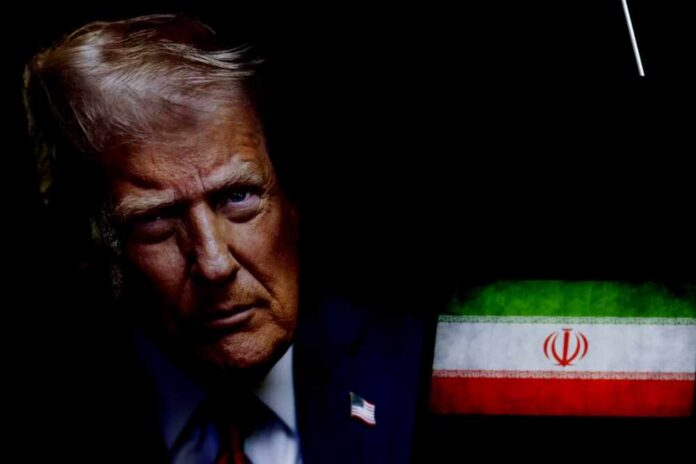
The White House is refusing to rule out “boots on the ground” in Iran—even as Americans are told this war can be won from the air.
Story Snapshot
- President Trump and Defense Secretary Pete Hegseth have publicly avoided any “no ground troops” pledge, keeping escalation options open.
- Major combat operations began in late February 2026 after a rapid U.S. naval and air buildup in the region.
- A joint U.S.–Israel strike killed Iran’s Supreme Leader Ayatollah Ali Khamenei, raising uncertainty about Iran’s internal stability and retaliation.
- U.S. officials say the campaign could last at least a month or longer, with American casualties already reported.
White House Messaging Leaves the Door Open
President Donald Trump’s team is walking a tight line: projecting strength while declining to promise that American ground troops will stay out of Iran. Trump has said he does not make blanket “no boots on the ground” commitments and would send troops if “necessary,” even while signaling that ground forces are “probably” not needed. That posture keeps military options available, but it also keeps the public guessing about the true endgame.
Defense Secretary Pete Hegseth has mirrored that approach, telling reporters he would not rule out ground forces and emphasizing that the timeline is fluid. The administration’s public posture frames the campaign as driven by air and missile power, yet the refusal to close off ground options signals that planners are preparing for contingencies. For Americans who remember how “limited” missions can expand, the ambiguity is the headline.
How the U.S.–Iran Crisis Accelerated Into Major Combat
The pace of escalation in early 2026 was fast. After Iran faced widespread anti-government protests, Trump publicly voiced support for protesters and warned Iran against killing peaceful demonstrators. U.S. military movements followed: carrier strike groups and additional naval assets surged toward the Middle East through January and February. By late February, Trump announced “major combat operations,” describing a campaign centered on standoff strikes and urging Iranians to “take over” their government.
Those events culminated in a dramatic turning point: a joint U.S.–Israel strike that reportedly killed Supreme Leader Ayatollah Ali Khamenei. Removing a regime figurehead can reshape a conflict overnight, but it can also create chaos, fragmentation, and unpredictable retaliation. The administration has described objectives that include degrading Iran’s missile capacity, harming its naval power, and striking nuclear-related targets—goals that can be pursued from the air but may be hard to “finish” without control on the ground.
Casualties, Duration, and the Pressure to Escalate
U.S. leaders are now preparing the public for a campaign that may last longer than early estimates. Trump has spoken about projections of several weeks while acknowledging it could go “far longer.” The Pentagon has also warned the conflict will not be a single overnight operation, with additional U.S. forces moving into theater. At least six American service members have been reported killed, and senior military leadership has warned more casualties are expected as operations intensify.
That combination—longer timelines, mounting losses, and a hardened enemy—typically increases pressure for escalation. If airstrikes fail to produce decisive outcomes, leaders often face a choice between accepting a stalemate or expanding the mission. The administration’s refusal to rule out ground troops is therefore not merely rhetorical; it is consistent with an operational reality in which planners must be ready for rescue missions, base defense expansions, securing key sites, or other limited ground actions that can broaden quickly.
Evidence Disputes and Congress’ Role in War Powers
One key friction point is the public justification for the war versus what lawmakers say they are hearing in briefings. Reporting cited in the research notes that the administration has asserted Iran revived nuclear weapons work and advanced missiles threatening the U.S. and allies, while internal Pentagon briefings to Congress reportedly stated intelligence did not show Iran planning a first strike. When evidence is contested, the Constitution’s separation of powers becomes more than theory.
White House Responds to Report that President Trump is ‘Seriously Considering’ Putting U.S. Troops on the Ground in Iranhttps://t.co/UVxsFYxIei
— Trevor Gough (@treego14) March 7, 2026
Congress has a duty to demand clarity on objectives, timelines, and legal authorities, especially if “boots on the ground” becomes more than a talking point. Conservatives who value limited government and constitutional order should recognize that war-making power is not meant to hinge on vague phrases or shifting goals. The administration may believe flexibility strengthens deterrence, but the public still deserves a plain explanation of what victory means—and what commitments Americans are being asked to shoulder.
Sources:
Trump announces major combat operations in Iran
Trump says U.S. military operations in Iran likely to last at least month
2026 United States military buildup in the Middle East
Trump Is Potentially Leading the United States Into an Unnecessary War With Iran
Trump rallies defense titans to surge weapons output as Iran war rages