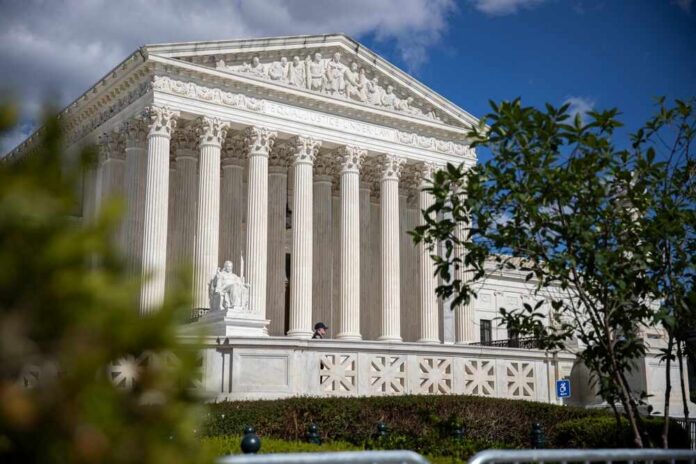
A sudden resignation on Utah’s highest court is raising a question Americans across the spectrum keep asking: who is really policing the people who wield power?
Quick Take
- Utah Supreme Court Justice Diana Hagen resigned effective immediately as political leaders pressed for an independent investigation into allegations involving a practicing attorney.
- The complaint came from Hagen’s ex-husband and referenced allegedly inappropriate texts; Hagen and attorney David Reymann have denied wrongdoing.
- Utah’s Judicial Conduct Commission investigated and dismissed the complaint, citing timing issues tied to Hagen’s prior case involvement and later recusal.
- The episode lands in the middle of an already bitter fight over redistricting, fueling doubts about whether institutions can stay above partisan warfare.
Resignation Leaves a Vacancy—and Fresh Doubts About Accountability
Utah Supreme Court Justice Diana Hagen resigned effective immediately in early May 2026, submitting a letter to Gov. Spencer Cox that pointed to protecting her family’s privacy and the independence of the judiciary. The resignation followed public reporting about allegations of an “improper relationship” with attorney David Reymann. The immediate practical effect is a vacancy on a five-justice court, with Cox now positioned to appoint a replacement.
Hagen’s letter framed the situation as a clash between personal privacy and institutional stability, signaling that remaining on the bench would keep the controversy alive. For many voters already convinced “the system” protects its own, the resignation can look like a familiar pattern: officials exit before the public gets clear answers. At the same time, the available reporting does not establish misconduct as fact, only that allegations circulated and drew official attention.
What the Allegations Involve—and What’s Actually Verified
The core allegation centers on allegedly inappropriate text messages and a claim of an improper relationship between Hagen and Reymann, an attorney known for representing progressive groups, including the League of Women Voters, in redistricting litigation. The complaint originated from Hagen’s ex-husband, after the couple’s divorce following a long marriage. Both Hagen and Reymann have denied wrongdoing, and public accounts do not include the full underlying messages.
Utah’s Judicial Conduct Commission investigated the complaint and dismissed it, with reporting indicating the commission focused on timing—specifically that the allegations surfaced after Hagen’s last direct involvement in the redistricting dispute. Hagen had already taken recusal steps related to Reymann’s cases, including a formal recusal in 2025 after reconnecting with him as an “old friend.” The Utah Supreme Court later issued a statement defending her actions as prompt and prudent.
Why Redistricting Made This Controversy Politically Explosive
The controversy cannot be separated from the underlying case that put Reymann and the court under a microscope. Progressive plaintiffs challenged Republican-drawn congressional maps in a high-profile lawsuit, and the redistricting fight became a proxy for broader battles over elections, representation, and power in a GOP-dominated state. That context helps explain why the allegation, even unproven, triggered intense scrutiny and why critics framed the situation as a potential conflict of interest.
From a conservative perspective, the redistricting angle matters because courts are increasingly asked to settle fights that legislatures used to resolve through politics. When judges are perceived—fairly or not—as aligned with one side’s political machinery, public trust suffers. From a liberal perspective, the reaction from Republican leaders can look like political pressure aimed at delegitimizing a court decision they disliked. The reporting supports one clear point: the dispute quickly became bigger than one person.
Commission Dismissal vs. Calls for an Independent Probe
After the Judicial Conduct Commission dismissed the complaint, Gov. Cox and Republican legislative leaders still pushed for an independent investigation, arguing that serious questions remained. That split—an ethics body closing a matter while elected officials demand further review—highlights a tension many Americans recognize nationally: institutional processes exist, but political actors often distrust them when outcomes cut against their interests. Hagen’s resignation effectively changed the stakes and timing of any continued review.
Utah Supreme Court Justice Resigns: Did She Have An ‘Improper Relationship’ with Leftist Lawyer?https://t.co/H6tcyUZctc
— PJ Media (@PJMedia_com) May 9, 2026
The immediate open question is what standard Utah should apply going forward: defer to the commission, or broaden the state’s approach to recusal and judicial transparency in politically sensitive cases. Limited public detail about the alleged texts means outside observers cannot independently evaluate the most inflammatory claims. What is clear is that Utah now faces the same challenge confronting the country: restoring confidence that rules are real, consistently applied, and not dependent on who holds power.
Sources:
Utah Supreme Court justice resigns amid probe into alleged relationship with redistricting attorney
Utah Supreme Court Justice Diana Hagen resigns amid conflict-of-interest allegations