Gunfire at the Washington Hilton during the White House Correspondents’ Dinner exposed how quickly America’s political “safe zones” can turn into security emergencies.
Quick Take
- Shots were fired in the Washington Hilton lobby during the White House Correspondents’ Dinner on April 26, 2026, triggering a rapid Secret Service evacuation of President Donald Trump and First Lady Melania Trump.
- Authorities apprehended a suspect identified in reporting as Cole Allen of Torrance, California; one Secret Service member suffered a minor injury, and no serious injuries were reported.
- Early accounts emphasizing a “National Guard swarm” appear overstated based on available reporting, which centers on Secret Service and local law enforcement response.
- Trump later addressed the country, praised the Secret Service, and said the event would be rescheduled, while investigators worked to determine motive.
Gunfire interrupts a high-security media gala
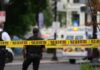
Shots rang out in the lobby of the Washington Hilton while the White House Correspondents’ Dinner was underway on April 26, 2026. Secret Service agents immediately moved President Donald Trump and First Lady Melania Trump away from the head table to a secure location inside the venue as guests ducked for cover. Reporting indicates the shooting occurred outside the ballroom area, with the suspect confronted quickly and the evening’s program halted.
Multiple outlets reported that the suspect sprinted past metal detectors and fired in the lobby area before being taken down and placed into custody. The suspect has been identified in reporting as Cole Allen, with a minor discrepancy across coverage on whether he is 30 or 31 years old. One Secret Service member was reported to have suffered a minor injury and was said to be recovering, while no fatalities were reported.
Trump’s response: reassurance, video, and a reset
After being transported back to the White House later that night, Trump addressed the public and emphasized that the suspect was in custody and that those under protection were safe. Reporting also indicates Trump posted security footage or a video clip related to the incident on Truth Social. The White House Correspondents’ Association, which hosts the dinner, said the event would be rescheduled within about 30 days.
The dinner carried extra symbolism because it was described as Trump’s first time attending as president, and it brought together senior administration officials, members of the press corps, and prominent guests. The setting also revived uncomfortable history: the Washington Hilton is associated with the 1981 assassination attempt on President Ronald Reagan outside the same venue. That parallel is less political theater than a reminder that iconic locations can still present real vulnerabilities.
What we know—and what we don’t—about security and motive
Early social posts and headlines described “law enforcement” and even the “National Guard” swarming the scene, but the most consistent reporting available centers on Secret Service actions and local law enforcement leading the investigation. If National Guard support played any role, details have not been clearly substantiated in the provided reporting. The motive also remains unclear in the information currently available, which limits conclusions beyond basic facts of the incident and response.
That uncertainty matters because political violence stories often get wrapped into partisan narratives before investigators establish a timeline, intent, and method of access. Conservatives tend to see events like this as proof that law-and-order capacity—not bureaucratic messaging—keeps people alive. Liberals often worry about broader patterns of gun violence in public spaces. The shared ground is simpler: Americans are tired of institutions that look unprepared until seconds after something goes wrong.
Why this incident lands in a broader trust crisis
Even with a fast apprehension and no mass casualties, the incident is likely to intensify pressure for a security review of major DC events that blend politics, media, and celebrity. It also reinforces the public’s sense that “elite” spaces do not operate under different laws of physics than the rest of the country. A single breach can disrupt an entire city’s posture, and the public is left asking how layers of screening and protection can still be defeated.
JUST IN: Law enforcement, National Guard swarm the scene after shots were fired at the White House Correspondents' Dinner. pic.twitter.com/RhSXBqeE58
— Fox News (@FoxNews) April 26, 2026
The political aftershocks will probably show up in competing arguments about policing, venue hardening, and the role of federal agencies, especially as Republicans control Congress and Democrats look for leverage through oversight and criticism. For voters across the spectrum who feel the system serves insiders first, the takeaway is sobering: whether you call it incompetence, misaligned priorities, or institutional drift, Americans keep watching preventable vulnerabilities surface at moments when leadership and accountability should be clearest.
Sources:
Trump attends White House correspondents dinner for first time as president
Karoline Leavitt Made Bizarre ‘Shots Fired’ Brag Minutes Before Shooting