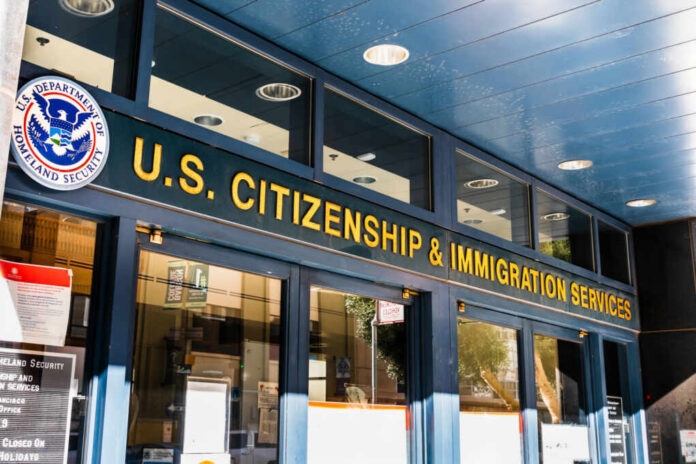
At the last possible moment, Washington handed more than 300,000 immigrant workers another short-term lifeline instead of a real plan.
Story Snapshot
- U.S. Citizenship and Immigration Services briefly extended work permits for immigrants with Temporary Protected Status from seven troubled countries.
- Most permits now run only until July 17, 2026, with Haiti extended one week longer to July 24, 2026.
- The move follows a Supreme Court ruling that let the Trump administration end protections for Haiti and Syria, while lower courts sort out the timeline.
- Both workers and employers face growing uncertainty as the government leans on courts and last-minute fixes instead of long-term policy.
What exactly the government just did
On July 10, 2026, the U.S. Citizenship and Immigration Services extended work permits for people in the United States under Temporary Protected Status from Burma, Ethiopia, Haiti, Somalia, South Sudan, Syria, and Yemen. These immigrants had permits that were about to expire, in some cases within hours. The new guidance keeps most permits valid until July 17, 2026, while Haitians get an extra week, until July 24, 2026. This move avoids an immediate work stoppage but only for a short time.
For Haiti, the agency issued a separate notice because its situation is tied up in a specific federal court case. Earlier guidance had extended many Haitian work cards only through February 3, 2026, based on a prior court order. The July 10 update tells employers to accept a wide range of older Haiti cards and to treat them as valid through July 24, 2026, when filling out employment forms and checking work status. Without this change, many long-settled Haitian workers would have lost their jobs overnight.
How court fights created last-minute chaos
These extensions are not part of a clear long-term plan from Congress or the White House. They are the product of years of legal battles over Temporary Protected Status and who has the final say over ending it. The Supreme Court recently ruled in Mullin v. Doe that the administration has broad power to end Temporary Protected Status for Haiti and Syria, sharply limiting how far federal judges can second-guess those choices. That ruling opened the door to termination, but lower courts still control the pace and timing.
Because of earlier lawsuits, federal courts had already blocked planned cutoffs for Haiti and other countries, forcing the government to keep work permits alive while the cases moved forward. The Department of Homeland Security has responded with a pattern of short extensions, often just months at a time, tied to each new court order. The July 10 step continues that pattern: the agency openly tells employers that the current dates are “per court order,” not a stable policy choice. This leaves families hanging on court calendars instead of clear laws.
Who is affected and why both parties are uneasy
Temporary Protected Status covers people from countries hit by war, natural disaster, or collapse of basic services, allowing them to live and work legally in the United States for set periods. Over the past three decades, both Republican and Democrat administrations have extended these “temporary” protections again and again, sometimes for more than 20 years. Many holders have U.S.-born children, mortgages, and long work histories, even though they technically have no permanent path to stay. For them, each short extension feels like a countdown clock on their entire lives.
Conservatives who support strict border control see these repeated extensions as proof that Washington has turned an emergency tool into a backdoor amnesty, without ever passing a law to say so. They point to court-ordered delays, shifting expiration dates, and last-minute reprieves as signs that the system is run by unelected judges and bureaucrats instead of voters. At the same time, many liberals see the Supreme Court ruling and the push to end protections as driven by harsh politics, not serious concern for human rights or stability in places like Haiti and Syria. Both sides see a process that feels rigged and unaccountable.
Strain on workers, employers, and the rule of law
For employers, these tiny extensions create real problems in hiring and planning. Companies must track a maze of card dates, court updates, and new federal forms, then explain to their own workers why a card that “expired” on paper is still valid because of a lawsuit. Legal alerts now advise human resources departments to keep copies of each new government notice with employee files to defend against audits. This is not how a predictable, pro-growth system should work in a modern economy.
The Trump administration issued an extension on work permits for hundreds of thousands of immigrants with temporary protected status (TPS) hours before they were set to expire on Friday.
Employment authorizations for Haitians now ends July 24.
For immigrants from Ethiopia,…
— Troy Myers (@Troy_Myers1) July 11, 2026
For many Americans across the political spectrum, this episode highlights a deeper concern: a federal government that cannot make hard choices or stick to them. Lawmakers in both parties have talked for years about creating a clear path either to permanent status or to an orderly return home for long-term Temporary Protected Status holders, but Congress has not passed a durable fix. Instead, people’s lives, local labor markets, and community stability now depend on two-week extensions and court fights that most voters never see. That mix of high stakes and low accountability is exactly what feeds anger at the so-called “deep state” and a sense that the system serves insiders, not citizens.
Sources:
washingtontimes.com, gunster.com, uscis.gov, haitianbridgealliance.org, e-verify.gov, reddit.com, forumtogether.org, jacksonlewis.com, scotusblog.com, asaptogether.org, congress.gov, americanimmigrationcouncil.org