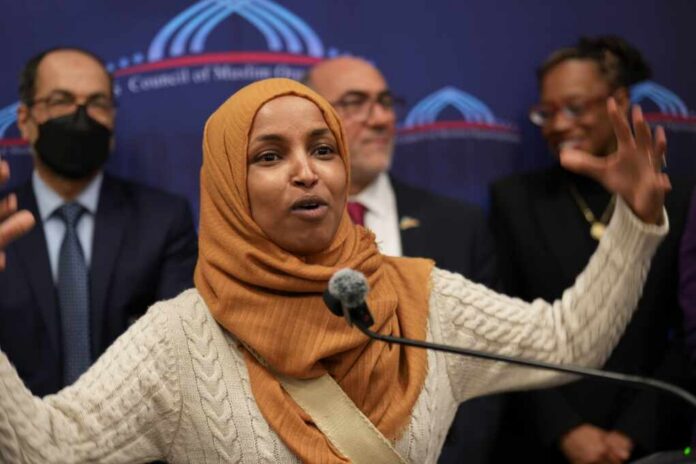
A stunning surge in a “Squad” lawmaker’s reported wealth has triggered a fresh test of whether Congress still believes in basic accountability.
Quick Take
- House Oversight Republicans opened a probe into Rep. Ilhan Omar’s personal finances after 2024 disclosures reportedly showed household assets as high as $30 million.
- Chairman James Comer signaled investigators may subpoena Omar’s husband, consultant Tim Mynett, over questions tied to his firm’s political work.
- Republicans are linking the scrutiny to broader Minnesota fraud investigations, while noting no charges have been filed and key claims remain unproven.
- Democrats argue the effort is partisan, even as outside watchdogs push Congress to strengthen oversight tools and transparency.
Oversight Republicans zero in on Omar’s disclosures and household wealth
House Oversight Committee Republicans launched an investigation into Rep. Ilhan Omar (D-Minn.) centered on her personal financial disclosures and what Republicans describe as a rapid change in her family’s wealth. The reporting cites 2024 disclosure documents and a GOP review claiming her household assets rose from near insolvency to as much as $30 million within roughly a year. Oversight Chairman James Comer (R-Ky.) said investigators intend to get answers and are reviewing records for possible ethics issues.
Republicans say the review is not limited to forms and figures. The probe also looks at Omar’s ties to her husband, Tim Mynett, and the work of his consulting firm with political organizations. Comer told the New York Post, as relayed in subsequent reporting, that Mynett could face a subpoena as investigators scrutinize what Comer characterized as questionable business practices. At this stage, the investigation remains in early fact-gathering mode and no subpoenas have been reported as issued.
Minnesota fraud cases add context, but links to Omar remain unproven
The reporting surrounding the probe places it against the backdrop of major fraud cases in Minnesota, including the Feeding Our Future scandal and broader claims of large-scale fraud losses tied to Somali-linked networks. GOP leaders, including House Majority Whip Tom Emmer (R-Minn.), argue Minnesotans were “fleeced” and demand transparency about whether any political figures benefited. The available sourcing describes parallel federal law enforcement interest in Minnesota politicians, but does not establish a direct criminal link to Omar.
That distinction matters, especially for readers tired of Washington double standards. The Oversight Committee can demand documents, hold hearings, and refer matters, but it does not convict anyone. The public record described so far points to questions—about disclosure accuracy, outside income pathways, and potential conflicts—rather than proven wrongdoing. If the committee produces clear documentation, it could justify referrals; if not, the story risks becoming another partisan shouting match that leaves taxpayers with more heat than light.
How ethics enforcement works—and why it rarely satisfies the public
Congressional ethics enforcement runs through overlapping lanes created after post-Watergate reforms: mandatory financial disclosures, the House Ethics Committee, and the Office of Congressional Ethics (OCE), which can investigate and recommend further review. OCE’s public reporting shows many inquiries and referrals over the years, but relatively few cases end with major penalties. Recent high-profile examples include the George Santos saga, where misconduct ultimately led to expulsion—an outlier compared with most ethics matters that end quietly or inconclusively.
The Omar inquiry stands out because it is being driven directly by a GOP-led Oversight Committee and, according to the reporting, blends a personal-finances review with a wider state fraud narrative. That is unusual compared with routine OCE referrals focused on discrete issues like gifts, reimbursements, campaign spending, or disclosure timing. The House can pursue spousal or third-party records through subpoenas, but such steps raise the stakes and can create a precedent that future majorities might use against political opponents.
Broader political crossfire: corruption claims, enforcement priorities, and 2026 oversight
Democrats have responded to Republican investigations by attacking Trump-era enforcement priorities and pushing their own claims of corruption, including calls tied to oversight fights and high-profile documents such as the Epstein files. Separately, Democrats have argued that shifting federal resources away from white-collar enforcement could hamper fraud and public-integrity work. Those claims, however, appear in political communications rather than neutral findings, and the underlying impact on specific cases is not clearly established in the research provided.
Rep. Tim Burchett Says 'a Lot of Congressmen Probably Should Be in Jail' https://t.co/39HpodN4Vx
— Mediaite (@Mediaite) February 10, 2026
For conservative voters, the practical question is simpler: will Congress apply consistent standards, regardless of party and ideology? Watch for concrete milestones—document requests, subpoena action, sworn testimony, and any referral to the House Ethics Committee—because those signal whether the probe is moving beyond headlines. Watch for clarity on what disclosures actually show, how assets were valued, and whether income streams were reported and compliant. Until those facts land, the story is a developing accountability test, not a finished verdict.
Sources:
House Republicans launch investigation into Rep. Ilhan Omar’s finances: report
Goldman, Warren, Blumenthal Lead 27 Members of Congress Calling for Investigation into Trump
Investigations
Robert Garcia wants the Epstein files — and says Trump is “the most corrupt”
Congressional Investigations 2026
7 Ways Congress Should Sharpen Its Oversight in 2026
H.R.385 — 119th Congress (2025-2026)