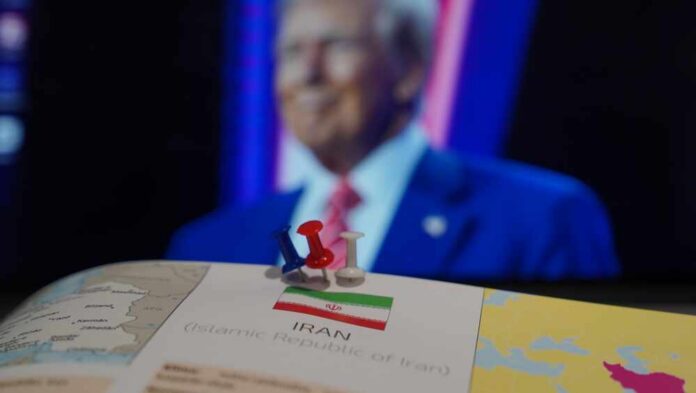
President Trump’s declaration of “total obliteration” in Iran rings hollow as oil prices surge to four-year highs and American families pay the price for a war he promised we’d never fight.
Story Snapshot
- Trump claims Iran is “militarily defeated” while rejecting ceasefire offers and threatening more strikes “just for fun”
- Oil prices have spiked 40% to $103 per barrel since the conflict began, directly contradicting Trump’s promise of lower energy costs
- Over 90 Iranian military targets struck, including Kharg Island oil terminal handling 90% of Iran’s crude exports
- NBC’s Kristen Welker pressed Trump on timeline contradictions as fighting continues with no clear end in sight
Trump’s Victory Claim Contradicts Economic Reality
President Trump told NBC’s Kristen Welker on March 15, 2026, that Iran has suffered a “total obliteration” and the war will end “very soon” with oil prices falling precipitously afterward. Yet Americans are experiencing the exact opposite at the pump. Oil has reached $103 per barrel, marking a devastating 40% increase driven entirely by this conflict. This isn’t the America First energy independence Trump campaigned on in his first term. Instead, hardworking families face soaring gas prices while the administration pursues regime change halfway around the world, the very type of endless war Trump once condemned.
Rejected Ceasefire Raises Questions About Strategy
Trump rejected an Iranian ceasefire offer, dismissing the terms as insufficient while threatening additional strikes on Kharg Island. He casually mentioned hitting the facility again “just for fun,” despite Kharg being Iran’s primary oil export terminal responsible for shipping 90% of the country’s crude. US Central Command has already conducted strikes on over 90 Iranian military targets while deliberately sparing oil facilities. This contradictory approach leaves many MAGA supporters bewildered: Are we trying to end this war or escalate it? The mixed signals undermine confidence in a coherent strategy, especially when Trump was reportedly briefed on risks of a Strait of Hormuz blockade but proceeded anyway.
Energy Costs Betray Campaign Promises
The oil price surge directly contradicts Trump’s 2024 campaign pledge to keep America out of new wars and maintain energy independence. At $103 per barrel, oil has hit four-year highs, creating economic pressure on working families already frustrated by inflation from previous administrations. Trump’s prediction that prices will fall after the war offers little comfort to constituents filling their tanks today. Iran’s potential to disrupt the Strait of Hormuz, a chokepoint for global oil transport, adds further instability. Retaliatory attacks against US allies Bahrain and Saudi Arabia demonstrate the conflict’s expanding scope, raising concerns about American entanglement in another Middle East quagmire with no exit strategy.
The situation exposes a fundamental tension within the MAGA movement. Supporters who embraced Trump’s rejection of globalist interventionism now watch their president prosecute a war with unclear objectives and mounting costs. Welker’s questioning during the interview highlighted these inconsistencies, pressing Trump on timelines while he simultaneously declared victory and threatened further strikes. The absence of ground troops offers limited reassurance when energy markets remain in chaos and regional stability deteriorates. For a base already skeptical of foreign entanglements and questioning support for Middle Eastern conflicts, Trump’s “total obliteration” rhetoric clashes with the economic pain Americans endure daily. Whether Iran’s military defeat translates to regime collapse as Trump predicts remains uncertain, but the costs are already clear at every gas station across America.
Sources:
Trump says there’s been ‘total obliteration’ of Iran militarily
Trump tells NBC a “large amount” of Iran’s leadership is gone