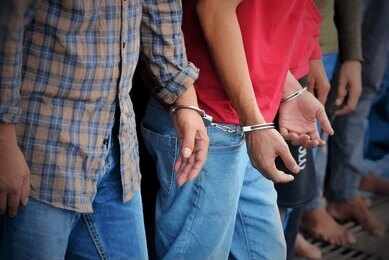
Lebanon’s quiet spy war just jumped into the open, with 32 people now accused of helping Israel target Hezbollah leaders.
Story Snapshot
- Lebanon says 32 people were detained for allegedly passing targeting data on Hezbollah to Israel.
- A singer described as close to Hezbollah is accused of giving coordinates used in a deadly airstrike.
- Several suspects have already been tried in military court and sentenced to hard labor, while most cases remain under investigation.
- Past wrongful espionage cases in Lebanon raise hard questions about proof, pressure, and political motives.
New Arrests In Lebanon’s Shadow War With Israel
Lebanese judicial officials say security forces have arrested **32 people** in recent months on suspicion of helping Israel strike Hezbollah targets inside Lebanon. According to statements given to Agence France-Presse, these suspects are accused of passing information on Hezbollah leaders and locations that “facilitated strikes” by Israel’s military. Six of the arrests reportedly occurred before a ceasefire in the ongoing conflict, while the rest followed later. Most of the suspects remain under investigation, showing the cases are far from settled in court.
Officials say nine people tied to this alleged network have already faced Lebanon’s military court. Two of them received sentences of seven and eight years of hard labor after judges found them guilty of giving Israel precise coordinates, addresses, and names of Hezbollah officials used in later attacks. This use of military courts, not civilian ones, fits a long pattern in Lebanon where security and “treason” cases are handled in a closed, highly politicized system. It also means regular citizens have little way to see the evidence or judge it for themselves.
The Singer Close To Hezbollah And Telecom Spy Concerns
Among the 32 suspects, one case stands out and has sparked heavy debate: a **singer described as close to Hezbollah**. A second judicial official says this man is accused of working with Israel’s Mossad spy agency “in exchange for money” and giving coordinates that led to the killing of a Hezbollah official and his son in an Israeli airstrike in April 2025. That claim, if true, shows how personal trust circles around powerful groups can be pierced by money and quiet pressure. But so far, his name has not been made public, and no detailed confession document has been released.
Espionage worries in Lebanon are not new, especially around the country’s phone systems. In an earlier case, the Telecommunications Minister Charbel Nahhas said a technician at one of Lebanon’s two main mobile networks was arrested after being suspected of spying for Israel for more than 15 years. Because such workers can access call records and network data, officials warn that even one insider can expose the movements and habits of political leaders or armed groups. For Americans who fear that “deep state” insiders use hidden tools at home, this shows how fragile critical infrastructure can be when politics and spying mix.
Harsh Penalties, Weak Transparency, And Risk Of Abuse
Lebanese authorities present these arrests as a necessary defense in a long-running intelligence war with Israel. Hezbollah and state officials gain political strength when they claim to uncover spy rings, because it helps them argue that the country faces an ongoing “existential threat” and must accept harsh measures. At the same time, many cases depend on anonymous judicial sources, brief summaries, and military court rulings, not open evidence. Ordinary people in Lebanon, like many in the United States, see a system where powerful insiders control the story and punishment but keep key facts out of sight.
History shows why some Lebanese are skeptical. In 2017, actor Ziyad Itani was arrested and accused of spying for Israel, with reports that he confessed to meeting Israeli agents. Later, a military investigative judge threw out the charges, and officials said he had been framed by a corrupt officer. He was freed and publicly cleared. Other past suspects have also been released for lack of evidence after being labeled “spies.” These reversals feed a wider fear: that security services can destroy a person’s life with a few secret files and then walk away when the story falls apart.
Economic Crisis, Desperation, And Ordinary People Caught In The Middle
Lebanon’s deep economic collapse adds another layer. Security sources say about **185 people** have been arrested since the crisis began on suspicion of working with Israel, many driven by desperate need for cash. Of those, 165 have been prosecuted and only 25 convicted so far. That gap between arrests and convictions looks familiar to Americans who see big government sweeps, tough headlines, and then very few solid court results. It raises the question: how many of these people were hardened spies, and how many were broke citizens caught in a system looking for enemies?
For readers in the United States, this story is a warning about how modern governments, whether in Beirut or Washington, use national security to grow quiet power. Lebanon’s leaders and Hezbollah claim they are defending the country from foreign plots, just as American officials often say they are protecting us from terror or cyber threats. But when cases rely on anonymous sources, secret evidence, and courts the public cannot really see, regular people on the left and right are left asking the same question: who watches the watchers, and when does “security” turn into control?
Sources:
insiderpaper.com, barrons.com, arabnews.pk, facebook.com, youtube.com, aljazeera.com, bbc.com