

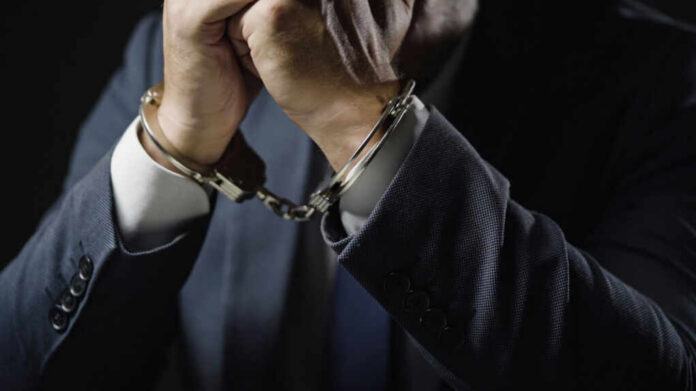
Austrian special forces arrested a 35-year-old alleged Russian arms smuggler in Vienna during an attempted weapons deal, spotlighting Europe’s uneasy struggle to stop illicit weapons flows.
Story Snapshot
- Austrian special forces made the arrest mid-deal in Vienna, according to initial reports.
- Austria has a track record of major weapons seizures and prosecutions tied to smuggling networks.
- Russia-linked espionage cases in Austria show a permissive environment for covert activity.
- Key details of this Vienna arrest remain limited, with no public charge sheet or inventory yet.
Arrest During Alleged Mid-Deal Operation in Vienna
Austrian special forces detained a 35-year-old alleged Russian arms smuggler in Vienna during an attempted weapons deal. Early reporting states the operation unfolded mid-transaction and led to at least one arrest. Officials have not released the suspect’s name or nationality documents. Authorities have also not published a seizure list, photos, or the case number. The Ministry of the Interior and the Directorate of State Security and Intelligence were described as coordinating related checks across Austria last week.
Public documents tied to this specific arrest have not been posted. That includes any warrant, charging papers, or a detailed list of the alleged weapons. The absence of those files limits what can be confirmed now. Still, the reported arrest fits a broader pattern. Austrian police have disrupted large smuggling pipelines before. In 2020, officials described caches of automatic weapons, handguns, grenades, and rounds of ammunition moving across borders.
Austria’s Record on Weapons Smuggling and Enforcement
Austrian investigators have experience taking down cross-border gun networks. A joint action with Italy dismantled a ring that supplied firearms to organized crime in Naples. That operation led to 22 arrests and the seizure of 139 guns and 1,600 rounds of ammunition. Austrian courts also report convictions under the national War Materials Law, showing cases can reach verdicts even if authorities release few public details about the defendants or methods.
Domestic seizures have been significant as well. In late 2020, Austria announced a haul of dozens of firearms, explosives, and at least 100,000 rounds of ammunition meant for German extremists, according to public statements at the time. The Interior Ministry said the cache was part of a pipeline aimed at militant groups in Germany. Those cases showed that Austria can move from raid to public disclosure when the evidence is secure and the network is broader.
Espionage Cases and a Wider Security Context
Austria’s security services have also confronted Russian espionage inside the country. A retired Austrian army colonel was convicted in 2020 for passing military secrets to Russian handlers over decades, underscoring long-term infiltration risks. In 2024, an arrest warrant described alleged handovers of sensitive mobile data to Russian intelligence, adding to concerns about foreign networks operating in Vienna. Former agents and analysts have called Vienna a hub for Russian spying due to its neutrality and dense diplomatic scene.
These espionage cases shape how the public views the new arrest. When a suspect is labeled “alleged Russian,” many connect the dots to prior spy scandals and disinformation efforts. But the current case still lacks open files that confirm identity, group ties, or the end buyers. Until Austrian officials post a charge sheet or an inventory, the scope of the alleged network remains unclear. That missing data makes it hard to judge the scale of the threat in this instance.
What We Know, What We Do Not, and Why It Matters
We know an arrest reportedly occurred mid-deal in Vienna, and that Austria has the capacity to disrupt networks that move guns, ammo, and explosives across Europe. We also know Austria has prosecuted smuggling cases in the past, even when public details were sparse. What we do not know are the seized items, the financing trail, or any links to state actors or extremist buyers. Those facts are crucial to understanding risk and reach.
This gap feeds a broader public worry that powerful people operate in the shadows while regular citizens face the fallout. Conservatives see open channels for illegal arms and espionage as proof that global networks ignore borders and laws. Liberals see another sign that security services and political leaders struggle to protect civil society from violent groups. Both agree the system often reacts late and shares too little. Transparent case files would build trust and help prevent the next deal.
Sources:
insiderpaper.com, theguardian.com, aljazeera.com, dw.com, rferl.org, spartanat.com, ukrinform.net, eurojust.europa.eu