As an armed teen in tactical gear ran toward the U.S. Capitol, it was his silent dog in the SUV that reminded many Americans how chaotic and confusing our politics and security have become.
Story Snapshot
- An 18-year-old from Georgia rushed toward the U.S. Capitol with a loaded shotgun and tactical gear before being arrested without shots fired.
- Capitol Police say they found extra ammunition, a Kevlar helmet, a gas mask, and a dog waiting in the suspect’s white Mercedes SUV.
- The teen’s motive is still unknown, raising fresh questions about lone actors, mental health, and how close dangerous people can get to national leaders.
- The incident highlights growing unease on both the right and the left about security, government competence, and the human cost of a system that reacts but rarely solves deeper problems.
What Happened Outside the Capitol
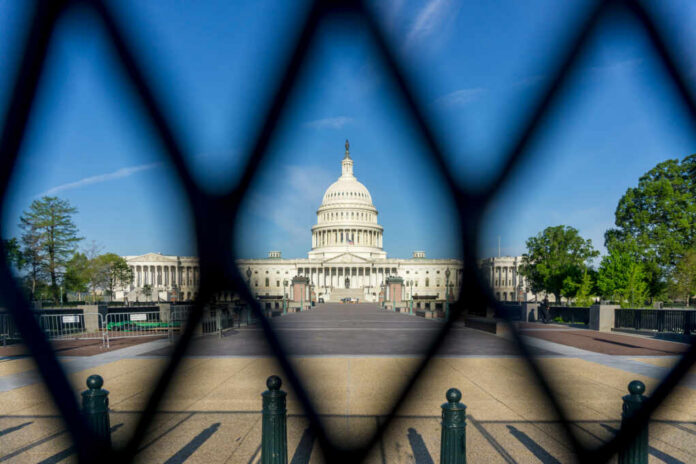
On February 17, 2026, U.S. Capitol Police say an 18-year-old man from Smyrna, Georgia, parked a white Mercedes sport utility vehicle on Maryland Avenue, just southwest of the Capitol. He allegedly got out carrying a loaded shotgun and ran up the walkway toward the building, wearing a tactical-style vest and gloves. Officers confronted him on the West Front terrace, ordered him to drop the weapon, and he surrendered without anyone firing a shot. He was then taken into custody on the spot.
Police later searched the sport utility vehicle and say they found more ammunition, a Kevlar helmet, and a gas mask inside. A dog was also in the vehicle, alone during the tense moments as tourists watched officers move in. Officials identified the suspect as Carter Camacho and reported that he faced charges for unlawful activity on Capitol grounds and for having an unregistered firearm and ammunition. So far, investigators have not shared any clear motive, leaving the public to guess what drove such a risky act so close to Congress.
Security Success Against a Larger Record of Failures
Capitol Police leaders quickly framed the arrest as proof that security has improved since the chaos of January 6, 2021. Officers stopped the teen within seconds and kept lawmakers, staff, and visitors safe, unlike the earlier riot when the building was overrun and some armed protesters roamed the halls. This time, police were on high alert, with fences, checkpoints, and patrols that are now common near the Capitol. For many Americans, that visible force feels both reassuring and troubling at the same time.
On one hand, people who worry about political violence and lone extremists see this swift arrest as necessary. Capitol Police say they have made more than a dozen gun-related arrests near the building in the past year alone, showing that armed individuals keep testing the limits of security. On the other hand, both conservatives and liberals who distrust the “deep state” see a permanent fortress around the people’s house as a symbol of a government that protects itself first and listens to citizens last. They see more reaction than prevention, more walls than answers.
What We Know—and Still Do Not Know—About the Teen
Public reports so far paint a disturbing but incomplete picture of the young man at the center of this case. He was heavily geared up, with a loaded shotgun, tactical vest, gloves, helmet, and gas mask—equipment that looks more like something from a militia video than from everyday life. Yet there is still no public evidence he shouted slogans, aimed at a specific politician, or tied himself to any known group. That silence around motive leaves a wide gap that official statements have not filled.
For many Americans, that gap feeds old fears about how the system handles mental health and young men in crisis. Some on the right see the incident as another sign of cultural breakdown and the failure of schools, families, and local communities. Some on the left point to guns, online radicalization, and deep inequality that pushes angry people toward extreme acts. Almost everyone can look at the armed teen and his waiting dog and feel that whatever pushed him to that moment was not addressed by any level of government before it was too late.
The Dog, the “Elites,” and a System That Only Reacts
The detail that stuck with many viewers was not just the loaded shotgun but the dog left in the vehicle as its owner ran toward danger. That image hits a nerve because it feels like the country itself—ordinary people and even innocent animals left to bear the shock while leaders argue from a safe distance. Capitol Police did their job that day, but the story stopped at “no shots fired” and “motive under investigation.” There was no public plan for what comes next beyond charges and court dates.
Conservatives who resent years of “woke” talk but little action, and liberals who resent harsh crackdowns with no real reform, share a quiet question after events like this: why does our government only seem to move once someone is already running at the Capitol with a gun? The teen will face the justice system, and his dog will likely end up in someone else’s care. But the deeper problems that produced another heavily armed young man within steps of national power remain mostly untouched, left waiting just like that dog in the car.
Sources:
redstate.com, edition.cnn.com, youtube.com, nbcnews.com, cbsnews.com, justice.gov